Meet Lead Teacher Sarah Ekholm-Jacobson
We asked her a few questions about her experiences as a teacher, parent, and lifelong learner:
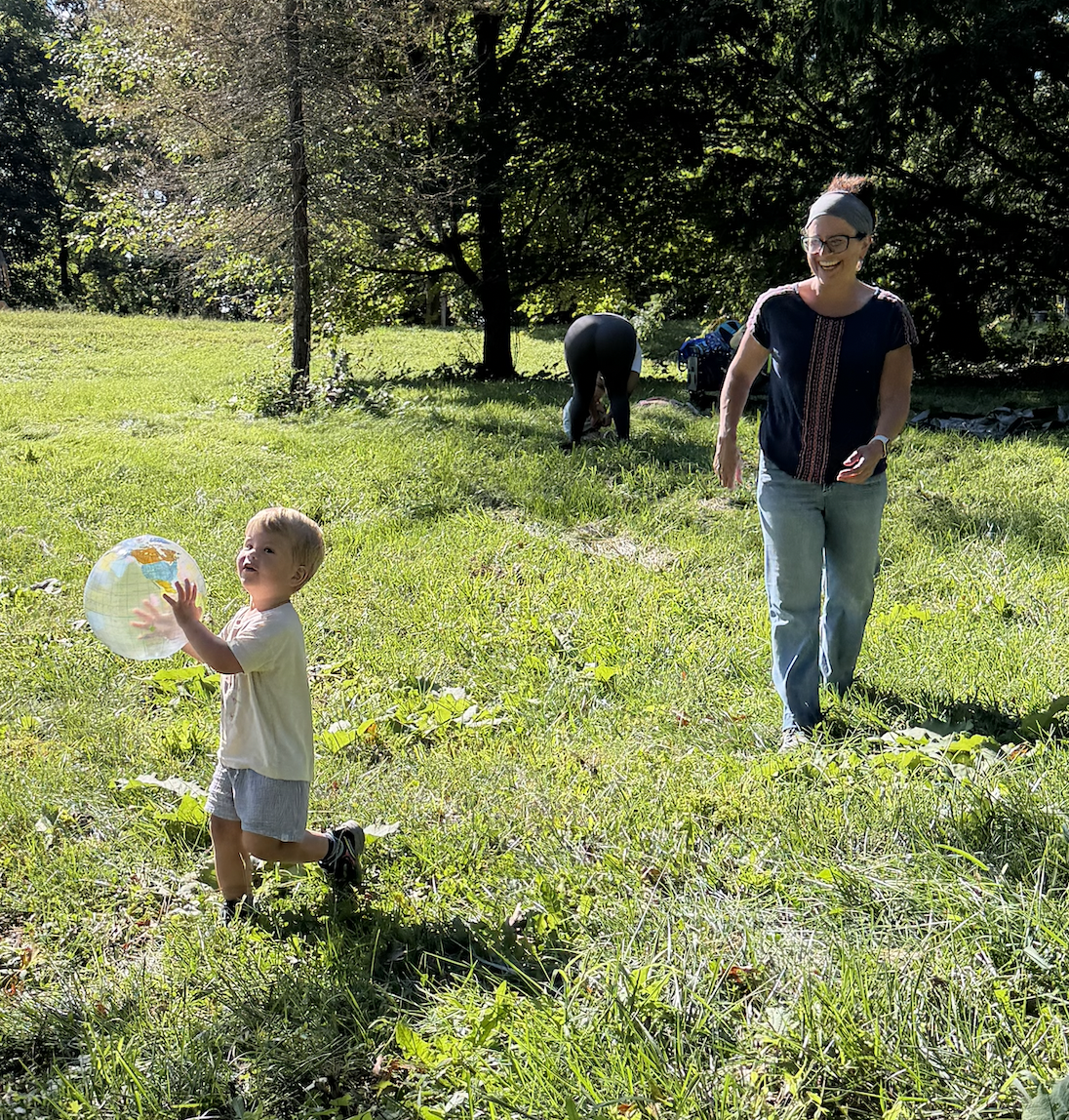
After 25 years of teaching, what have children taught you about who they are and how they learn?
After 25 years of teaching, children have taught me to slow down, listen deeply, and trust their capabilities. I’ve learned that children are naturally curious, capable thinkers who learn through relationships, hands-on experiences, play, movement, and time spent exploring the natural world.
They have shown me that there is rarely just one “right” way to learn. Each child brings their own rhythm, questions, ideas, and way of seeing the world. My role is not to give them all the answers, but to create an environment where they feel safe to wonder, experiment, make mistakes, and discover for themselves.
Most of all, children have taught me that wonder is worth protecting. When we give children time, beauty, meaningful materials, connection to nature, and the freedom to follow their curiosity, they remind us how much there is to discover—and how much they have to teach us, too.
What drew you to ECO at this point in your career?
After many years teaching integrated preschool and kindergarten in a public school, I felt ready for a new chapter in my teaching journey—one that would allow me to be more present and to reconnect with what I have always loved most about working with young children.
I was drawn to ECO because of its deep respect for children as capable, curious, and creative individuals, and because learning here feels so connected to the natural world. The opportunity to step outside, follow children's questions, give them time to explore, and learn through meaningful, hands-on experiences really resonated with me.
While this is my first time teaching at a nature preschool, I see it as an exciting opportunity to continue growing as an educator. After years in a more traditional school setting, I’m especially excited to be in a place where relationships, wonder, nature, play, and the child’s own ideas are at the heart of the learning. ECO feels like a place where I can bring the experience I’ve gained over my career while remaining curious and open to learning alongside the children.
Has being a parent changed you as a teacher? If so, how?
Being a parent has deepened my understanding of how beautifully unique each child is. Raising my two children, now 17 and 11, has taught me to slow down, listen closely, and trust that children develop in their own time and in their own way.
As a teacher, I find myself looking beyond a child’s behavior to understand what they may be communicating. I value giving children the time and space to explore, make choices, become independent, and follow their own curiosity. I believe some of the most meaningful learning happens when we allow children to wonder, get messy, take a closer look at a tiny bug, or spend time deeply engaged in their play.
Parenthood has also given me a deeper appreciation for the trust families place in their children's teachers. I strive to create a classroom where children feel known, capable, and valued, and where families feel welcomed and respected.
Most of all, watching my own children grow has reminded me how quickly childhood passes. It has made me even more committed to honoring childhood—to giving children time to play, explore nature, build relationships, and experience the joy and wonder of simply being a child.
What do you think children need most from the adults that share their days with them?
I think children need adults who truly see them, trust them, and listen to them. Children need to know that they are capable and that their ideas, questions, feelings, and ways of seeing the world matter.
They need adults who provide a sense of safety and belonging while also giving them the freedom to explore, take appropriate risks, make choices, and work things out for themselves. They need time—time to wonder, to play, to repeat, to struggle a little, and to become deeply engaged in something that matters to them.
Most of all, I think children need adults who are willing to slow down and be curious alongside them. When we resist the urge to always direct or provide the answer, we create space for children to develop their own ideas and discover what they are capable of. Our job is to offer a secure foundation, then trust children enough to let them grow from there.
ECO’s nature preschool class is intentionally small. What does that make possible for children and teachers?
A small class allows us to truly know each child—their interests, their rhythms, their strengths, and the ways they make sense of the world. With fewer children, there is time to slow down, listen deeply, and follow where their curiosity leads.
For children, a small group creates a sense of belonging and safety. They have more opportunities to develop meaningful relationships, practice independence, collaborate with friends, and become active participants in their classroom community. There is space for a child to linger with a discovery, return to an idea, or simply observe without feeling rushed.
For teachers, a small class allows us to be intentional observers and responsive guides. We can notice the questions children are asking, the connections they are making, and the interests that emerge naturally through play and exploration. Rather than following a predetermined path, we can thoughtfully build on those discoveries and allow the curriculum to grow from the children themselves.